“Final Statement of the Sudanese Forces for the Declaration of Principles: No Place for the National Congress Party, the Islamic Movement, or Their Affiliates in the Political Process”
 The Sudanese Forces for the Declaration of Principles held a meeting in Nairobi, Kenya, from 19 to 21 July 2026 to discuss developments in the humanitarian and political situation in Sudan, review efforts aimed at ending the war, assess the trajectory of the political process, and explore ways to strengthen coordination among the components of the Declaration of Principles. The meeting focused on supporting efforts to halt the war, protect civilians, restore democratic civilian transition, and complete the path of the December Revolution.
The meeting reviewed the rapidly deteriorating humanitarian situation across the country in recent months as a result of the continued war, the expansion of violations, and the immense suffering endured by Sudanese people inside the country and in areas of refuge.
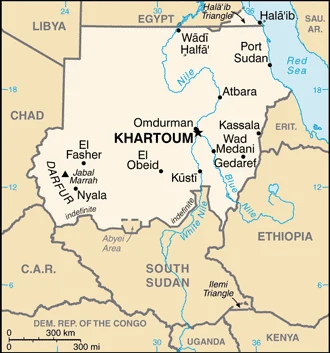
The meeting condemned the use of drones by both warring parties and their targeting of civilian areas, infrastructure, and essential services, describing such actions as grave violations of international humanitarian law and dangerous escalations that further deepen the suffering of civilians. It also condemned the escalating risks of ongoing military confrontations in the city of El Obeid and surrounding areas, as well as in the states of Kordofan, Darfur, Blue Nile, and other parts of the country.
The meeting renewed its support for efforts to document violations through independent international mechanisms, stressing the need to monitor, investigate, and verify all crimes, including allegations of the use of chemical weapons, and to hold those responsible accountable in accordance with international law.
The meeting commended the growing popular movement inside Sudan, the resilience of citizens in confronting the consequences of the war, and the role played by civil society groups and all popular initiatives in providing humanitarian assistance, defending civilians’ rights, and countering narratives of war, hate, and division.
It also praised peaceful movements calling for an end to the war and the restoration of civilian rule, affirming that the Sudanese people’s determination to achieve peace and democracy remains strong despite all attempts at repression and polarization.
The meeting discussed developments in the political process and affirmed that the regional and international efforts aimed at ending the war are appreciated. However, it stressed that the current approach requires fundamental reviews based on the principles outlined in the roadmap adopted by the Quartet in September 2025 while ensuring coordination with the efforts of the Quintet and other initiatives.
The meeting emphasized that any political process must be Sudanese-owned and Sudanese-led, strengthen the role of democratic civilian forces, and prevent the parties to the war from imposing their agendas or controlling its outcomes.
The meeting firmly rejected any attempts to include the National Congress Party, the Islamic Movement, or their affiliates in the political process, stating that this “terrorist” system bears primary responsibility for undermining the state, fueling wars, and obstructing democratic transformation. Therefore, it affirmed that they have no place in Sudan’s future.
The meeting decided to intensify popular, political, diplomatic, and human rights efforts at the domestic, regional, and international levels to build support for a new approach to the political process. This approach should address the crisis as an integrated package that includes the immediate declaration of a humanitarian truce, ensuring unimpeded access for humanitarian aid, strengthening civilian protection mechanisms, and launching an inclusive political process led by Sudanese civilian democratic forces committed to ending the war and rebuilding the state on new foundations.
The meeting stressed that such a process should exclude only the National Congress Party, the Islamic Movement, and their affiliated entities.
The meeting adopted a joint political vision for addressing the coming phase, strengthening coordination among the components of the Declaration of Principles, and implementing an intensive three-month action programme covering humanitarian, popular, political, media, diplomatic, and human rights tracks.
The programme aims to expand efforts to end the war, mobilize regional and international support, strengthen the presence of civilian forces across various platforms, support accountability efforts and protect victims’ rights, and work with all forces committed to peace and democracy to achieve a civilian transition that ends the war and establishes lasting stability and prosperity.
The Sudanese Forces for the Declaration of Principles reaffirm that they will continue working, alongside all national and democratic forces and regional and international partners, to end the war, protect civilians, and build the Sudanese state on the foundations of equal citizenship, the rule of law, democratic civilian governance, and the completion of the path of the December Revolution.
In conclusion, the meeting extended its gratitude to the sisterly Republic of Kenya, its government and people, for hosting Sudanese citizens, particularly those who sought refuge as a result of the war, and for providing spaces that support the efforts of civil forces working to achieve peace in Sudan.