
“Emergency Rooms in Deira and Derbat – Eastern Jebel Marra: Youth Initiative Brings Hope Amid Displacement Crisis and Service Shortages”
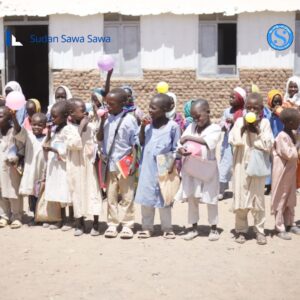 Amid worsening humanitarian conditions following the April 15 war, “Emergency Rooms” in the areas of Deira and Derbat have emerged as an inspiring model of community response. Young volunteers are leading intensive efforts to absorb large waves of displacement and ease the suffering of affected families.
Yassin Suleiman Ibrahim, a member of the Deira and Derbat Emergency Rooms, told Sudan Sawa Sawa that the initiative began modestly, relying on women’s efforts and donations from local markets to provide basic necessities for families fleeing El Fasher and other parts of Sudan. These efforts quickly expanded through community partnerships with local authorities, traditional leaders, and school administrations, leading to the establishment of more than 13 shelters across the area.
As the number of displaced people grew, the initiative evolved into a network of nine coordinated emergency rooms. It also succeeded in building partnerships with supporting organizations that provided food assistance, helping to sustain community kitchens, alongside organizing training workshops for volunteers.
Despite limited resources, local communities in Jebel Marra have shown remarkable solidarity, sharing food and shelter with displaced families in a powerful display of social cohesion in times of crisis. The emergency rooms, in partnership with organizations such as DRC, ARC, and NTA, have also distributed food baskets and supported communal kitchens, in addition to cooperating with other entities across various sectors.
However, significant challenges remain. Organizers point to limited access by humanitarian organizations, resulting in acute shortages of food and essential services. The health sector is particularly strained, with an almost complete absence of medical services, lack of laboratory facilities in hospitals, and rising mortality rates—especially among women—due to inadequate healthcare.
Despite these conditions, the emergency rooms have continued health awareness efforts, launching campaigns to combat cholera through area spraying and water chlorination, alongside public awareness initiatives on hygiene and the risks of measles, in an attempt to curb the spread of disease.
In a related development, Rabbani Hussein, a member of the Deira Emergency Room, said efforts have extended to supporting the education sector. Notebooks, textbooks, school bags, and sports equipment have been distributed to schools in the Kiba area to improve the learning environment and revitalize morning programs. However, schools still require additional support, particularly for communal kitchens, seating supplies, and meal provision for teachers facing difficult living conditions.
The initiative’s organizers concluded with an appeal to humanitarian partners to scale up support for such local efforts. They noted that the number of displaced people in the area is approaching 20,000, while available resources and services remain far below the level of need.
Despite the challenges, the experience of the Emergency Rooms in Deira and Derbat stands as a testament to the power of community-led initiatives and their ability to make a real difference, even under the most difficult circumstances.